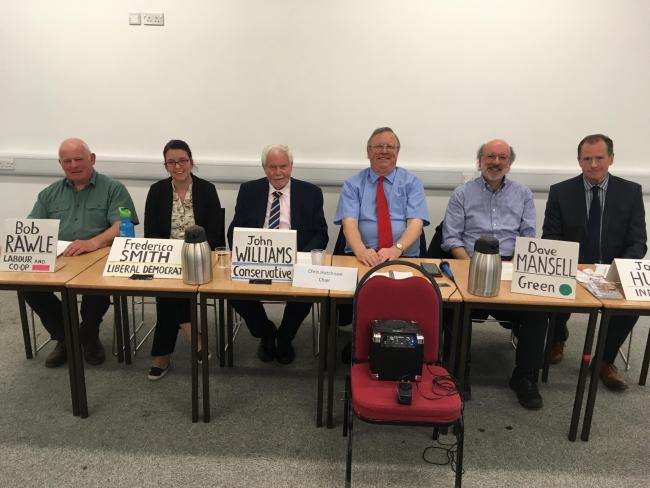
Monday 1st April saw the Climate Change and Environment Hustings for the elections for the newly merged council of Somerset West and Taunton. These hustings were organised by Taunton Transition Town and Taunton Green Parents.
The full write up is in the Somerset County Gazette. (https://www.somersetcountygazette.co.uk/news/17544801.taunton-climate-change-hustings-at-richard-huish-college/ ).
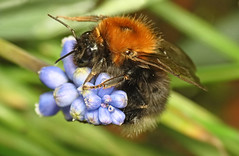
Anita Roy from Transition Town Wellington asked a question in reference to the Somerset County Council report Somerset Pollinator Action Plan ; would there be any support in making the Somerset West and Taunton Area a pesticide free zone to aid pollinators like bees, butterflies, hoverflies and other pollinating insects.
Candidates answers were generally supportive of the plan; focusing on the different management plans prospectively being brought in to manage grass verges and SCC and SWT owned land ie less cutting which Mr. Hunt (Independent) realistically pointed out would not be popular with the electorate (well maybe those not at the hustings). There was a general consensus in planting wildflowers in verges with Bob Rawle from Labour/Co-Op noting the work that needed to be done to maintain wildflowers with his experience at the country park of Longrun Meadow. Ms Smith of the Liberal Democrat’s suggested the planting of fruit trees and changes to the management of green spaces in areas of social housing whilst Mr Williams pointed to plans for a new Country Park between Priorswood and Monkton Heathfield that would eventually home 14,000 trees. Mr Mansell was the only candidate to address the pesticide free zone by advocating keeping the ban on neonicotinoids and moving towards localised and sustainable farming practices.
Adrian Tate from Transition Athelney welcomed the fact that both TDBC and SCC had declared Climate Emergencies and asked what firm and ‘courageous’ actions candidates would offer in speaking publicly about the inevitable increase in refugee numbers and the changes in lifestyle which climate and ecological emergency would force on us.
All candidates were supportive of working together whether that be at SWT level or SCC level to mitigate climate change…Ms Smith who found Refugee Aid From Taunton (RAFT) pointed out that climate change went beyond local issues. Mr Hunt noted that politicians needed to lead from the front and act now but there was very really little said about changes in lifestyle that would be needed. No one was being courageous.
Brian Tumey asked if work-based parking charges should be brought in with the money generated being invested in public transport. This received a lukewarm response from most of the parties. There was a consensus amongst the Liberal Democrats, Green and Labour that more investment was needed in public transport.
 The most positive response to a question was from Ian Bright from Taunton Area Cycling Campaign. He asked the candidates whether they would help to support a bid to central government of up to £10m to improve cycling infrastructure in the Taunton area as part of the ‘Turn the network blue’ campaign.
All candidates were supportive with Mr Williams stating that the council had already committed £1.5m towards the work. Ms Smith described how improving cycling and walking infrastructure was a key commitment in the Liberal Democrat’s manifesto and looked for funding options from Community Infrastructure Levy. Mr Rawle said that Labour supported such schemes and emphasised that cycle routes should be put in place before housing developments were begun. Mr Mansell noted that cycle routes were not properly connected but perhaps more importantly commented that car use was still being encouraged. Mr Hunt noted his work done with other councillors to improve cycling infrastructure in Station Road in Taunton.
Catherine Keener asked what the candidates would do to bus travel more affordable for 16- to 19-year-olds. There was general agreement from the Liberal Democrats, Green Party, and Labour to provide free bus passes for 16-19 year olds with Bob Rawle pointing out that the vehicle excise fund could be used to fund public transport. The Conservatives and Independent candidates did not think free public transport for 16-19 year-olds would work though Mr Hunt did consider a form of subsidy for buses to run later and which are cheaper.
Alan Debenham asked the candidates that as Taunton was now a ‘Garden Town’ what changes would they make to Taunton to distinguish it for visitors.
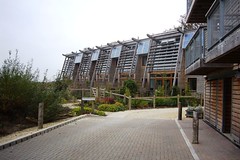
The Independent Mr Hunt taking a light-hearted approach suggested a ‘Welcome to Taunton’ sign made from plants and a band playing ‘Green, Green Grass of home’. Mr Williams looked to improving the new housing developments to provide better links to the garden town green wedges. The Green Party Mr Mansell called for a major re-think to the Firepool site and would support appropriate renewable energy schemes in the area. For example Taunton would stand out if we had wind turbines near the M5. Having an integrated transport hub, which was easy to use and was affordable was supported by Labour Mr Rawle. Looking at housing Mr Rawle cited Great Bow Wharf in Langport as example of what housing should aspire to. This was echoed somewhat by Liberal Democrat Ms Smith who gave Cranbrook in Devon as a standard for high quality housing. She also advocated for the scheme to pedestrianise the town centre to be pushed forward.
Ann Sparks from Transition Town Wellington posed the question about encouraging solar panels on new builds. There was a near unanimous consensus to support any moves to make it mandatory on new builds. Mr Mansell of the Green Party criticised the current government for not supporting renewable energies; by effectively banning on shore wind, and pulling subsidy from solar suddenly leaving solar panel installation companies high and dry. Mr Rawle pointed to looking into technologies such as battery storage facilities such as the one owned by South Somerset District Council .
Jefferson Horsley asked the panel in the light of the student strikes over government inaction on Climate Change (with reference to the Swedish school girl activist Greta Thunberg stand on acting on climate change) what they would do to reduce energy consumption to deal with the climate emergency.
Mr Rawle called on action of upgrading housing to provide better insulation. Both Ms Smith, Mr Hunt and Mr Mansell spoke of changing society away from a consumerist economy whilst Mr Williams said that Britain needed to go back to a ‘make do and mend’ culture (obviously does not known about the Blackdowns and Wiveliscombe’s Repair Cafe sessions that are going from strength to strength.)
Habib Farbahi asked whether the panel would prevent building on open spaces with reference to the recent decision to build a cancer support centre on part of Galmington Playing Fields.
Mr Hunt believed that the decision to build on Galmington Playing Fields had been made before the planning committee met to discuss. Ms Smith said the council should bring in to place policies that protected green spaces from housing developers. This was echoed by Mr Rawle who advocated building on brownfield sites before building on green spaces. Mr Mansell highlighted the fact that there was no dedicated officers to protect green spaces and advocate schemes to mitigate against climate change. This point was picked up by Mr Williams who said he would push for more environmental health officers [note… probably means environment officers].
 Taunton Transition Town